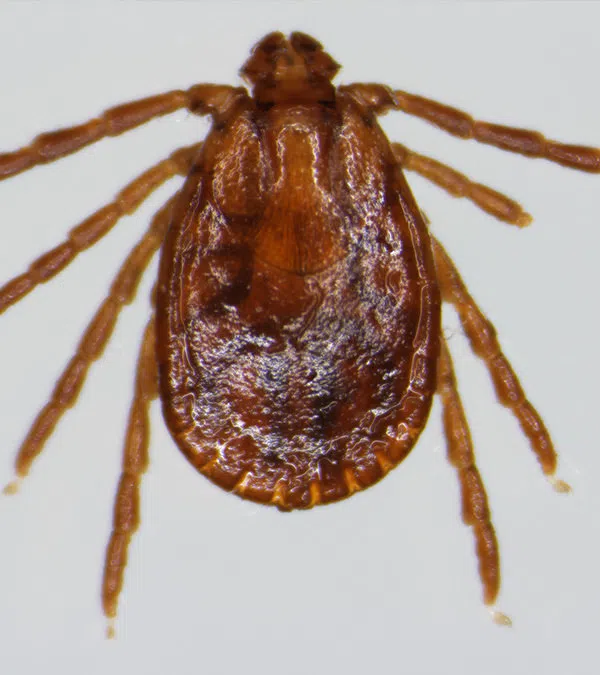
Kansas officials have confirmed the first detection of the invasive Asian longhorned tick in the state, that was discovered on a dog. The finding prompted a public notice from the Kansas Department of Health and Environment due to concerns about the tick’s potential impact on both animal and human health.
The Reddish Brown tick is known for reproducing without mating and can cause severe illness in cattle—infecting blood cells and leading to weakness, fever, appetite loss, or even death. Kansas State officials urged the public to take preventive measures such as wearing long sleeves, using insect repellent, and checking for ticks after being outdoors.
State and federal officials emphasized that while the tick’s presence in Kansas does not yet indicate widespread infestation, vigilance is essential.. The tick, first discovered in the U.S. in 2017, has now spread to more than 20 states.
Photo Credit: Northeast Regional Center for Excellence in Vector- Borne Diseases
Comments