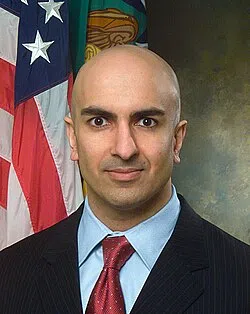
US Dept. of Treasury photo of Neel Kashkari
Federal Reserve President Neel Kashkari presented at the Midwest Economic Outlook summit in Fargo Thursday, speaking to North Dakota business leaders, warning that while some sectors are thriving, like data centers, the state’s skilled labor market, particularly in construction, remains in a “highly competitive” squeeze, according to Jeff Beach from the North Dakota Monitor.
The Federal Reserve has an important role in regulating the economy, according to the Monitor; they mediate interest rates by cutting them to bolster the economy, and by increasing them to limit inflation. The current interest rates around 6% are causing stress for homeowners, which Kashkari acknowledged.
Kashkari pointed to a unique pressure on the local housing market that has emerged contemporarily: the boom in AI data centers. The demand for extensive, complex electrical and plumbing infrastructure outbids residential developers for the state’s limited pool of skilled tradespeople. “This is life in a market economy,” Kashkari said. “If there’s a major investment in one sector… it’s going to draw resources from other sectors.”
State demographer Nigel Haarstad confirmed during a panel that North Dakota has surpassed 800,000 residents for the first time. However, the Monitor reports he said that this growth has been driven largely by international immigration, which is now slowing due to the recent federal policy changes. North Dakota’s unemployment rate remains exceptionally low at 2.6%, meaning there is no reserve of “people laying around” to fill new openings.
The ND Monitor reports Kashkari pointed to a dramatic shift in federal immigration policy as a primary driver of rising costs. Last year’s move to impose a $100,000 fee for new H-1B visa petitions, up from a previous maximum of $5,000, has effectively choked the supply of international workers who historically fill critical construction roles.




Comments