Based on reporting by Michael Standaert, North Dakota News Cooperative
Find the original article here.
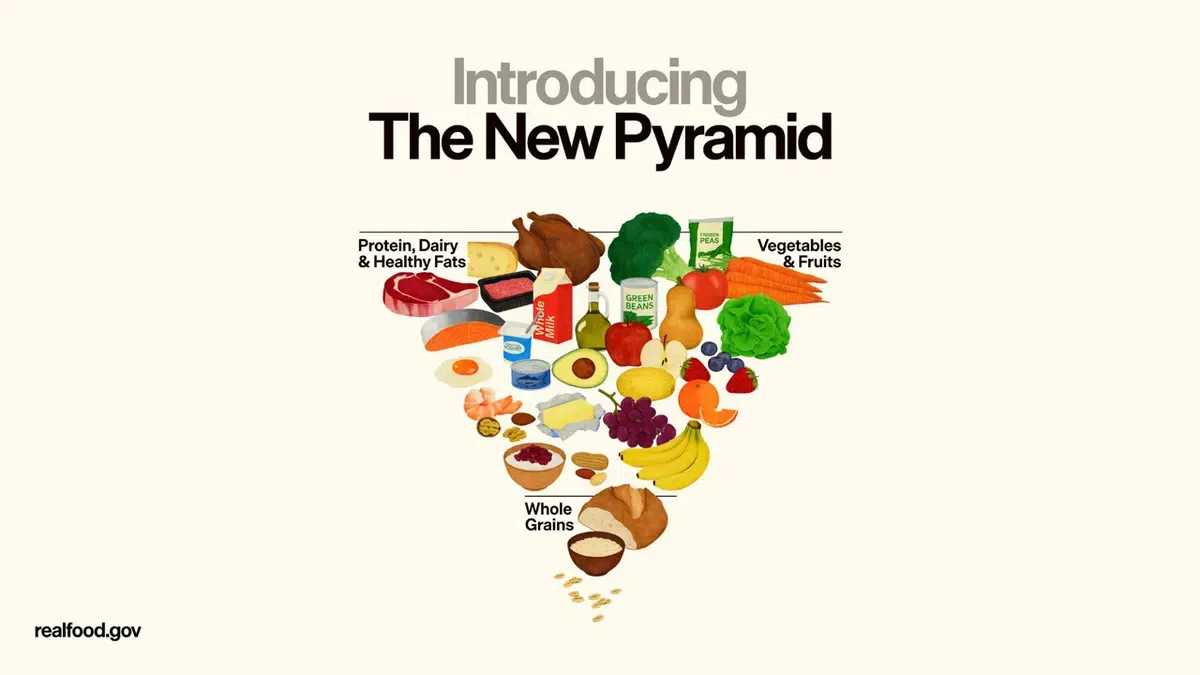
Since the introduction of MAHA’s new “flipped” national nutrition pyramid, North Dakota K-12 schools are bracing for a massive overhaul of their kitchens, while labor budgets are already stretched thin in many schools.
Health officials argue the shift is vital to prevent health issues, and state education leaders and food service/nutrition directors seem to be in favor of the shift. However, those same leaders warn that “expedited” federal mandates could create a logistical and financial nightmare for local districts. Lynelle Johnson of the Department of Public Instruction points out to the NDNC that feeding 400 children in a 20-minute window for roughly $4 per meal plus labor costs leaves little room for scratch cooking.
Switching from “heat and serve” processed foods to whole foods like raw potatoes would require a significant increase in labor, which requires money that current federal reimbursement rates don’t cover, according to Jennifer Hehn, Lisbon Schools’ Food Service Director. Most North Dakota schools lack the infrastructure for raw protein processing, requiring expensive retrofits for grease traps, industrial tilt skillets, and expanded freezer space.
In Bismarck, Nutrition Director Michelle Wagner notes that the sheer complexity of tracking “vegetable subgroups” and calorie maximums makes scratch cooking a puzzle. The district is now exploring a central kitchen model to consolidate labor and increase efficiency as these standards tighten through 2028.
Some policies, like limiting sugar, have already been implemented, with other long-term goals like increasing healthy fats and protein are slotted in the near future.


Comments