(EDITORS NOTE: Listen to the fully unedited interview at the link below the article.)
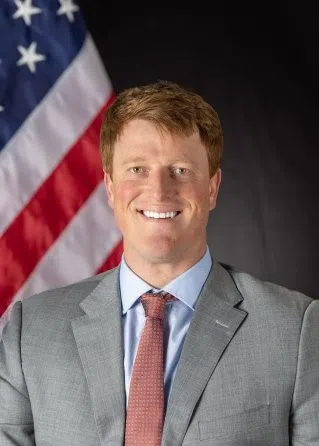
EPA Regional Administrator Cyrus Western joined KSJB Radio to discuss the repeal of the MATS regulations around coal power, the approval of the North Dakota’s Combustion Residuals Program, and the future of wind power in the state.
The Trump Administration and Environmental Protection Agency announced the repeal of the 2024 Mercury & Air Toxic Standards, or MATS, regulations. Those standards regulated the amount of mercury and other metals that were allowed to be emitted by coal-fire power plants.
“These regulations were going to take coal fire generation and put it out of business entirely,” Administrator Western told KSJB Radio. “It had some serious economic impacts.”
The EPA pointed to $670 million in savings from the de-regulation. When asked where those savings will be seen, Western said the utility companies bared the brunt of those costs.
“A lot of those costs are borne by the utility companies.”
Residents have seen their rates increase between 6-15% on average since 2024. Western said utility companies were forced to increase their rates.
“A lot of these utilities have consistently increased those (rates). One of the reasons they’re increasing them is regulatory compliance.”
Western said that the Trump Administration will be more friendly to coal and other fossil-fuel power sources going forward. The repeal of MATS puts air-pollutant standards back to 2012-levels that Western said should be a sufficient standard to keep people safe and the air clean.
“We are going to take regulations, put them back into a common sense, reasonable place that allows these facilities to continue to burn coal while simultaneously ensuring we also have clean air as well.”
Environmental and outdoors groups in North Dakota have fiercely pushed back against that framing, saying that the 2024 regulations were needed to remove harmful pollutants that have been detected in fish, waterfowl, and other wildlife in the state. Studies have shown increased levels of mercury levels in fish consumed by humans in North Dakota are attributable to pollutants from coal and other fossil-fueled power plants.
“I would push back against critics who are saying that,” Western responded.
“This repeal is not going to allow any additional mercury or any additional metal to be admitted. This simply goes back to the 2012 standard.”
When asked if fisherman, outdoorsman, and other North Dakotans should be worried about potential health impacts, Western said those concerns weren’t warranted.
“We feel very confident that this rollback can be done while ensuring human health.”
The EPA also announced the approval of North Dakota’s Coal Combustion Residuals Program. That approval will allow the state to determine disposal sites and methods for waste from coal-fired power in the state. The federal government had previously been in charge of regulating the disposal.
“I think North Dakota knows North Dakota best, not Washington. Not the (EPA),” Western said.
With renewed focus on fossil fuel and nuclear power development, leaders in North Dakota have expressed concern about the future of wind power in the state. The Trump Administration and EPA have taken a hostile approach to wind power development. President Trump recently spoke at an economic forum in Davos and said, “Wind power is for stupid people.”
The Trump Administration has also suspended approval for hundreds of wind power projects across the country. Interior Secretary Doug Burgum recently announced that all offshore wind projects would be suspended for five years. The Administration has also said that wind projects are a national security threat.
North Dakota has over 2,200 wind turbines, and the state generates approximately 30% its energy from wind power.
Power companies and wind developers have expressed worry about what the Trump Administration’s approach to wind power means for it’s future in the state.
“However private wind developers want to spend their money, that’s up to them,” Administrator Western said when asked about those concerns.
Western did not directly clarify when asked if there would be any steps to take away wind power in any capacity from North Dakota.
“North Dakota knows North Dakota best. We really want to work with them, and our focus right now is ensuring that coal fire generation and all of those tradition sources again.”
Listen to the full interview at the link below.









Comments